
Table of Contents
- Introduction: a reality we cannot ignore
- Who are the unaccompanied foreign minors (MENA)?
- Legal framework: the obligation to amparo the Spanish State
- The situation in Ceuta: an overflowing territory
- Rights of these children
- Real case
- Summary: obligations and rights in the protection of children
- Frequently asked questions
- Conclusion
1.Introduction: a reality that we cannot ignore
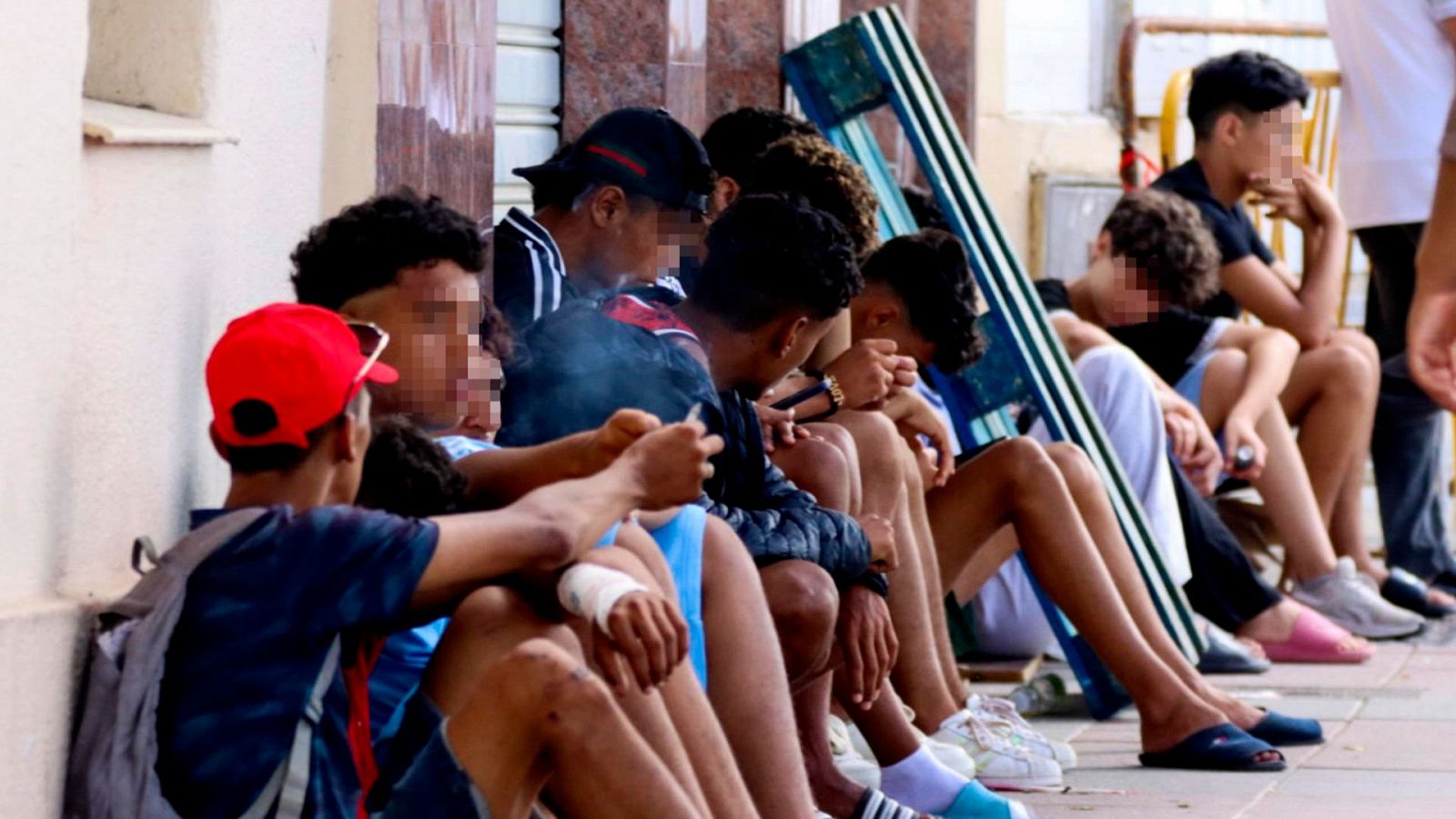
There are more than 100 children in Ceuta who are not being protected by Spanish law. They are under 13, 14 years old who have crossed alone, without their father or mother, seeking a life they could not have in their country of origin. When Spain does not comply with its own legislation on the protection of children, it does not only violate a law: it leaves a child unprotected.
From Leynver Abogados we believe it is necessary to explain, with legal certainty, what Spanish legislation on these minors really says, what obligations public administrations have and what rights they have, regardless of their origin or administrative status.
2. Who are the unaccompanied foreign minors (MENA)?
An unaccompanied foreign child (MENA) is considered to be a child under the age of 18, a national of a non-European Union country, who arrives in Spanish territory without being accompanied by an adult responsible for it, whether legally or customary.
These minors do not speak Spanish, Catalan, Basque or Galician; they do not share Andalusian, Extremean or Madrid accent. The barrier to language and cultural distance do not, however, change a fundamental legal fact: they are children, and as such, subject to protection reinforced by the Spanish and international order.
3. Legal framework: the obligation to amparo the Spanish State
The protection of these minors is not an option or an ex gratia concession by the Administration. It is a legal obligation arising from several rules:
National legislation
- Organic Law 1 / 1996 on the Legal Protection of Children (and its amendment by Organic Law 8 / 2015 and Law 26 / 2015), which establishes the best interests of the child as the guiding principle of any administrative or judicial action affecting him.
- Organic Law 4 / 2000, on the Rights and Freedoms of Aliens in SpainArticle 35 of the Act specifically regulates the regime of unaccompanied foreign minors and obliges the child protection services to take care of them.
- The Spanish ConstitutionArticle 39, which imposes an obligation on public authorities to ensure the social, economic and legal protection of children.
International standards
- The United Nations Convention on the Rights of the Child (ratified by Spain in 1990), which in its article 20 recognizes the right of every child deprived of his or her family environment to receive special protection and assistance from the State.
Overall, these rules are a clear mandate: at the time when an unaccompanied foreign minor is located in Spanish territory, the competent administration —in this case, the Autonomous City of Ceuta— has the obligation to take care of them, to guarantee them accommodation, food, schooling and health care, and to process their documentary situation.
This framework is part of a broader policy set that in Leynver Lawyers we usually work in our area of Foreignand that in recent months it is under legislative review: you can consult our analysis on the reform of the Aliens Act and the Asylum Act to understand how it can affect these cases.
4. The situation in Ceuta: an overflowing territory
Ceuta, by its geographical position, is one of the most frequent entry points for children from North Africa. This has generated sustained pressure on the host resources of the Autonomous City, which has often been overflowing.
The result, repeatedly denounced by agencies such as the Ombudsman and various NGOs, is that a significant number of children remain on the street, without the coverage that the law recognizes them, in a situation of lack of protection which the Spanish legislation itself considers inadmissible.
This does not exempt the Administration from its legal obligation. The fact that there are budgetary or infrastructure difficulties does not eliminate the duty of guardianship; in any case, it requires the State to strengthen the coordination mechanisms between the Autonomous City and the General State Administration to respond to the situation.
5. Rights of these children
Regardless of their nationality or how they have entered Spanish territory, an unaccompanied foreign minor has the following rights, among others:
- Right to administrative protection by the relevant public child protection body.
- Right to adequate accommodationin special care centres for children.
- Right to educationunder the same conditions as any minor resident in Spain.
- Right to health careregardless of their documentary situation.
- Right to residence permitthat the administration must deal ex officio after the guardianship has been completed, in accordance with Article 35 of LO 4 / 2000.
- Right to be heard in any administrative or judicial procedure affecting him, in accordance with his age and maturity.
Failure by the Administration to comply with any of these obligations may be the subject of a complaint and, where appropriate, an appeal to the courts.
6. Real case
In the video, the reality of these children is directly raised: children who see other Spanish children accompanied by their parents while they remain alone on the street, without the legal coverage they have. It is a reminder that, behind figures and regulations, there are personal stories of children who deserve the same protection as any other child on Spanish territory.
7.Summary: obligations and rights in the protection of children
| Appearance | Obligation / Law | Applicable rule |
|---|---|---|
| Guardianship of the child | The Administration must immediately assume it. | LO 4 / 2000, art. 35 |
| Hosting | Right to adequate reception | LO 1 / 1996 |
| Education | On equal terms with national minors | LO 1 / 1996 |
| Health care | Guaranteed regardless of status | Constitution, art. 39 |
| Documentation | Processing of residence ex officio | LO 4 / 2000, art. 35 |
| Best interests of the child | Guiding principle of any action | LO 1 / 1996 / Convention on the Rights of the Child |
8. Frequently asked questions
What should the Administration do when it locates an unaccompanied foreign minor?
It must put it under his care immediately, guarantee him accommodation, food and assistance, and report it to the register of non-accompanied foreign minors.
Can an unaccompanied foreign minor be expelled from Spain?
Not automatically. The law prioritizes the best interests of the child and his or her Family reunification where possible and beneficial to him; return may only be made after a procedure with guarantees and verification that there is no risk to the child.
What happens if the Administration does not fulfil its obligation of guardianship?
Enforcement may be required by administrative and, where appropriate, judicial means. There are complaints mechanisms before the Ombudsman and the possibility of recourse to the courts.
Do these children have the right to work at the age of majority?
Yes, provided that they have regularized their documentary status during the minority, which in principle enables them to obtain work permits on the age of 18. In the event that they have not been protected in time, many of these young people must resort to figures such as the social security to regularize their situation as adults.
9. Conclusion
The protection of unaccompanied foreign minors is not a matter of generosity, but of strict compliance with the law. Spain has provided a regulatory framework that recognizes these children the same basic rights as any other child in its territory: guardianship, housing, education, health and a path to documentary regularization.
When this protection does not come, it is not just an administrative decision: it is a legal failure with direct consequences for the lives of children who have already been through extremely difficult circumstances. In Leynver Abogados we believe that it is important to know and enforce these rights, both by the minors themselves and by those who work for their protection.
